We study dynamical systems, complex networks, and build ML tools that facilitate dynamic data analysis and learning
Reach UsExamining the dynamics of information dissemination and the formation of opinions within networks holds significant importance. The overarching goal of this project is to construct a versatile and authentic simulator (i.e., a "digital twin"), designed to comprehend the propagation of information in dynamic environments. The project integrates theories of multi-agent systems and dynamic planning with knowledge graphs to build an interpretable and dynamic information environment.
The overall objective of this project is to design efficient aperiodic communication protocols, privacy-preserving and scalable learning algorithms for inference and filtering, and resource-conscious control strategies for networked autonomous, heterogeneous agents in a distributed setting.
The overall objective of this project is to enhance the safety and reliability of generative AI systems, specifically virtual health assistants (VHAs) in healthcare, by integrating clinical process knowledge through Knowledge Graphs (KGs). The project aims to produce safety-constrained VHAs that adhere to medical guidelines, providing understandable explanations for users. Beyond healthcare, the research contributes to the broader field of AI by advancing neurosymbolic AI techniques, fostering collaboration between humans and AI, and promoting transferability to safety-critical domains.
The principal objective of this research is to advance methodologies for modeling, learning, and controlling networked cyber-physical systems (CPS), specifically those incorporating human users or operators in their feedback loop, through a systematic emphasis on data- and knowledge- driven approaches.
The primary goals of the collaborative project are to develop a) a real-time reward manipulation scheme for learning-based controllers, b) multi-level attack schemes on reward signals in a distributed control architecture for CPS, and c) data-enabled strategies for their detection.
Planning and learning methods for controlling misinformation propagation in social networks.
Ontology-driven representations for planning knowledge and multi-agent path finding.
Resource-efficient multi-agent path finding validated on TurtleBot4 hardware.
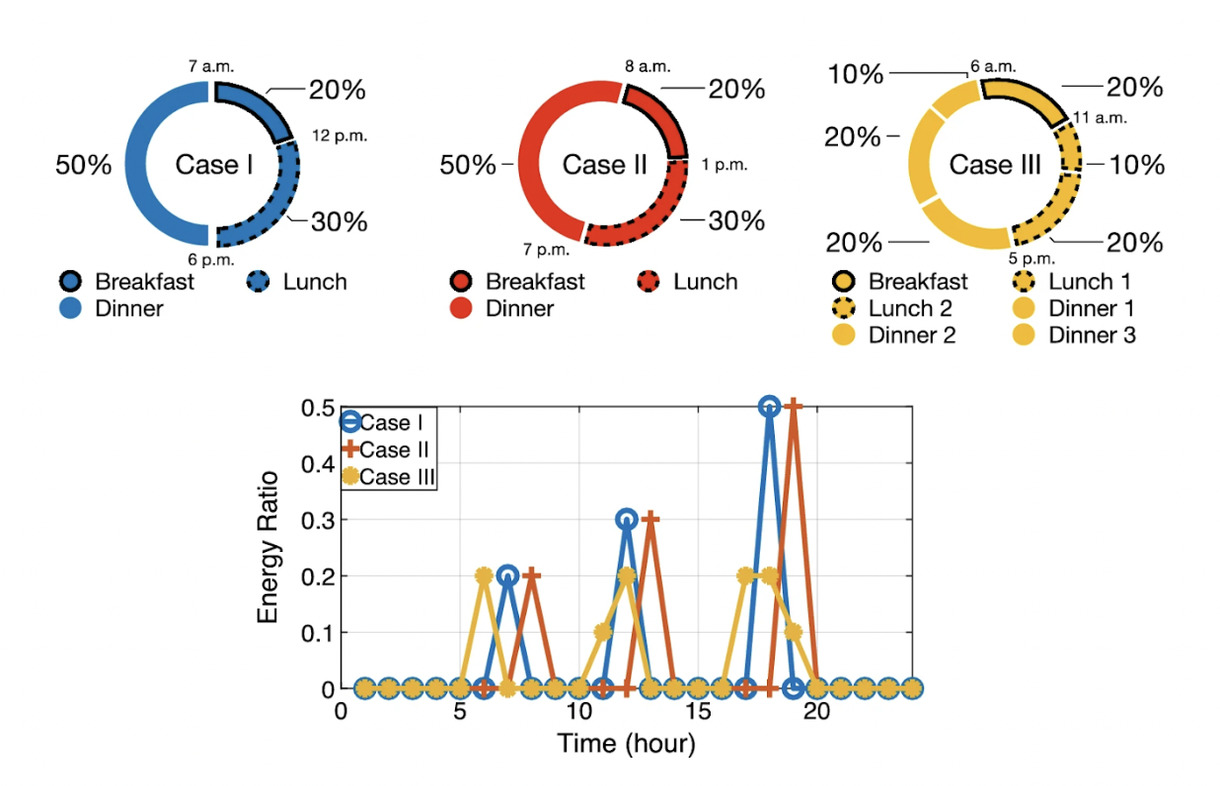
Nested two-stage clustering algorithm for dietary pattern analysis
Reservoir networks: Interpretable design
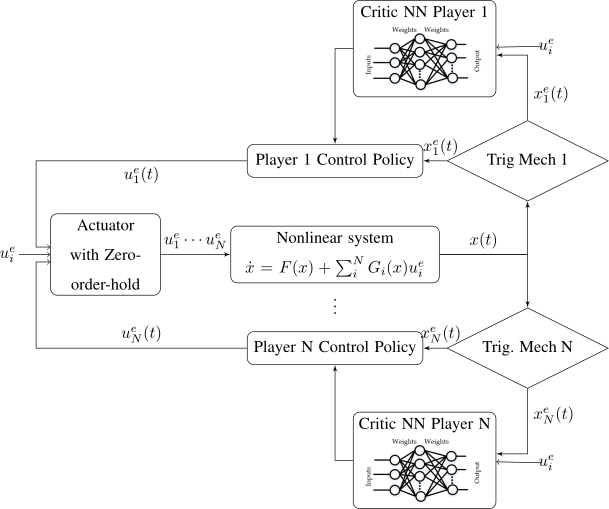
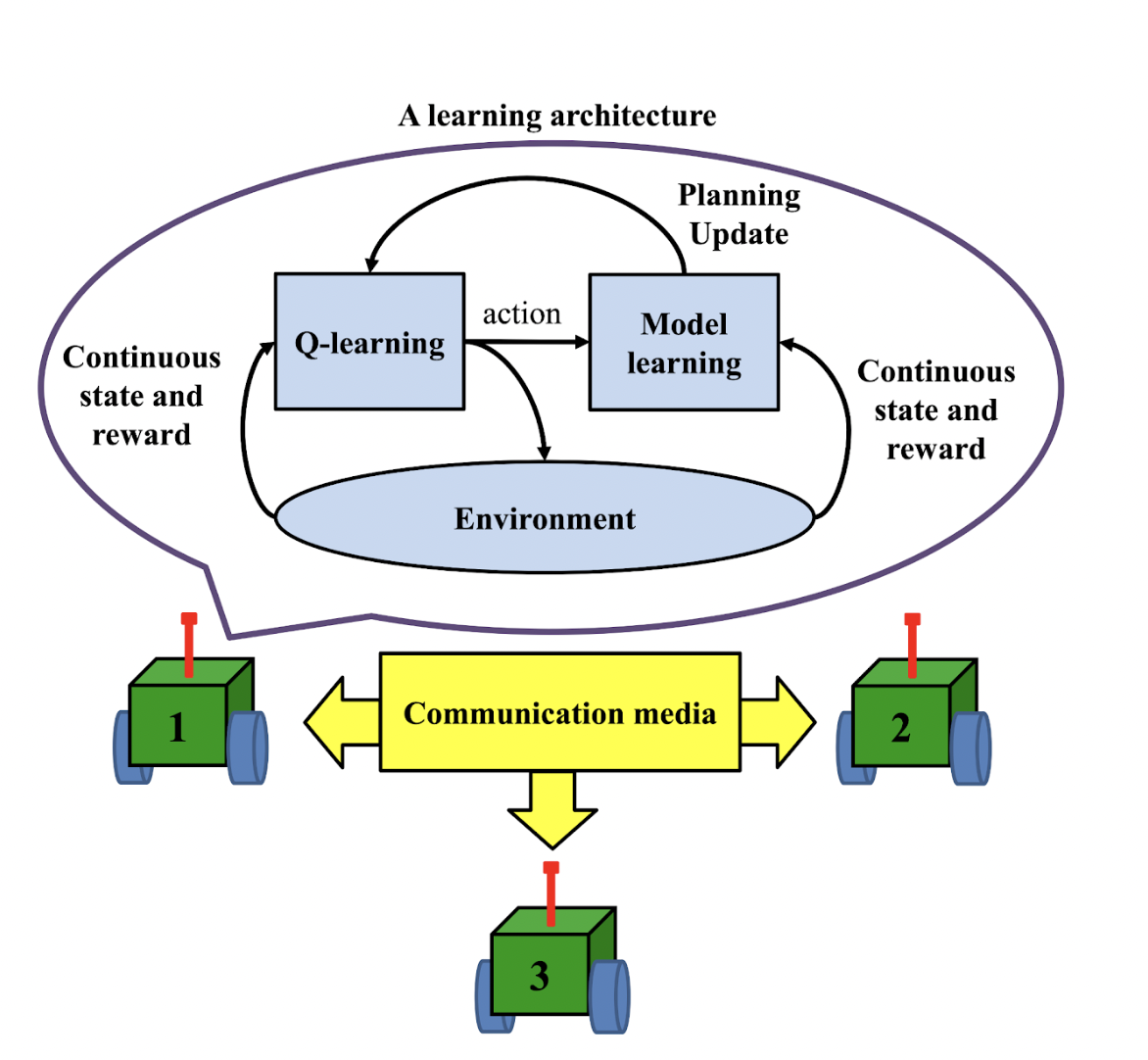
Reinforcement learning for model learning and knowledge sharing
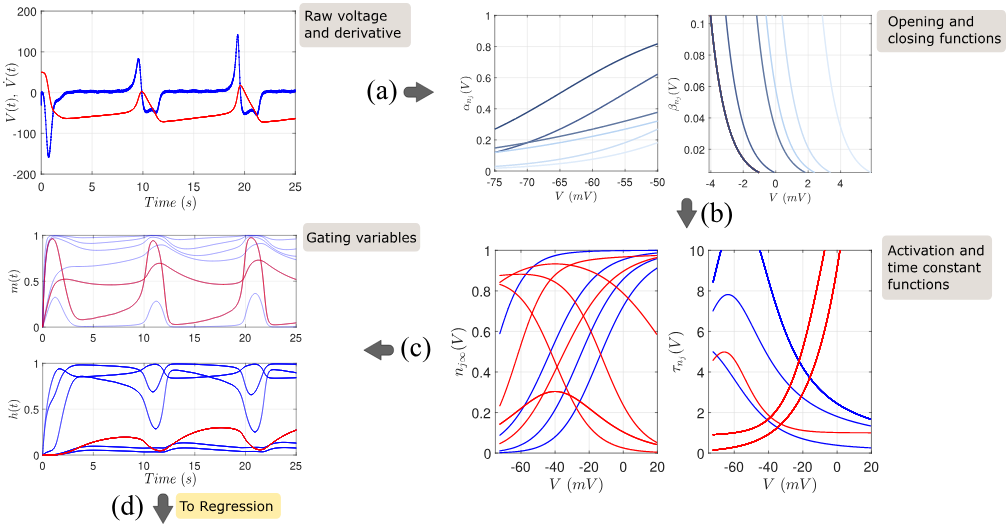
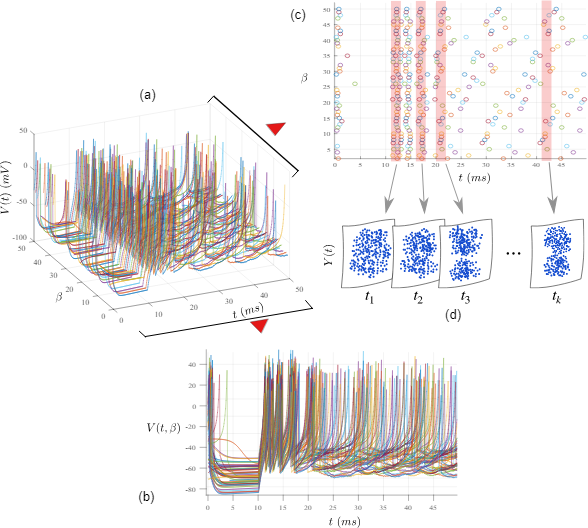
Inferring dynamics of single neuron from in vitro recordings
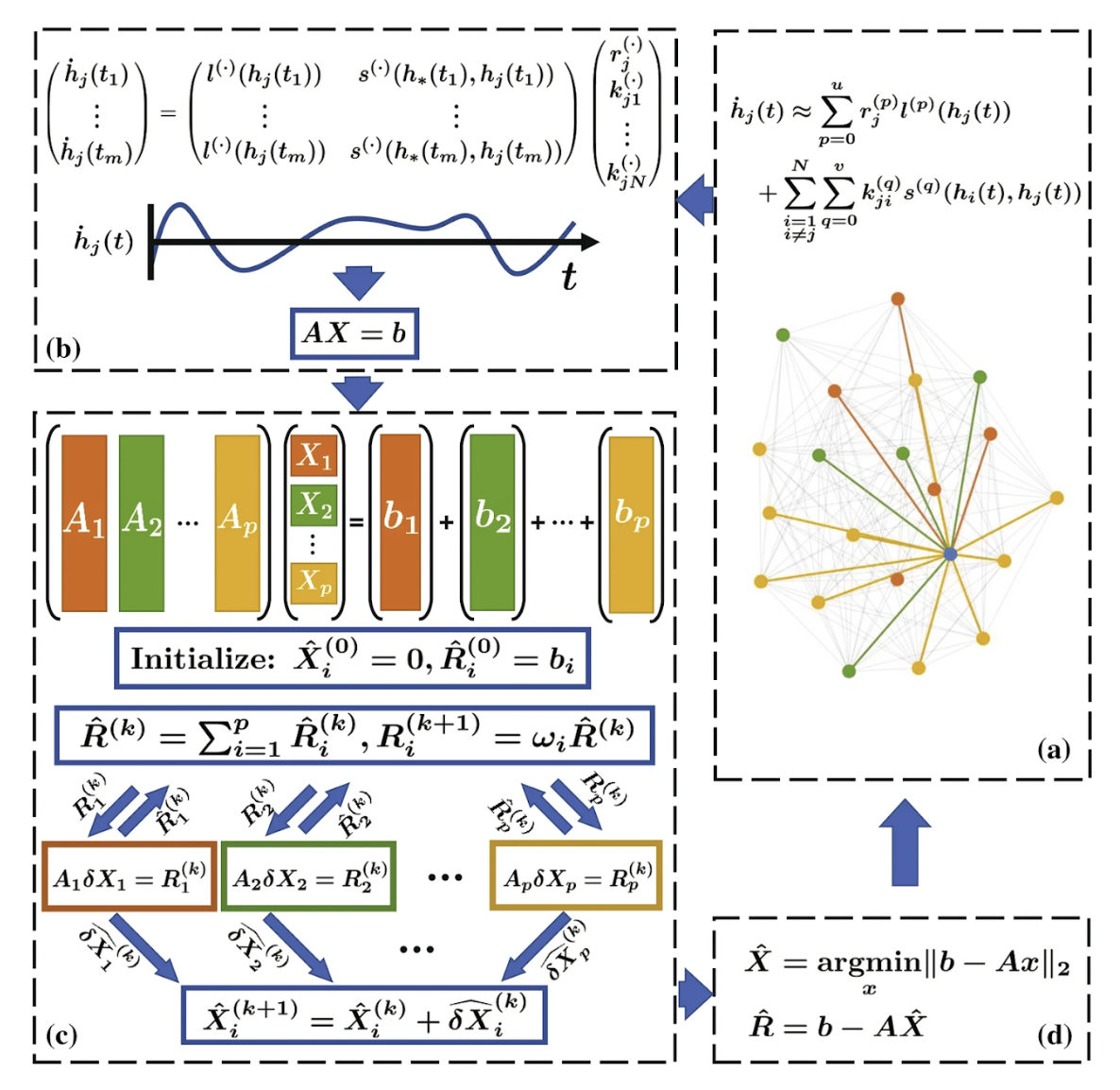
Distributed optimization: Parallel residual projection
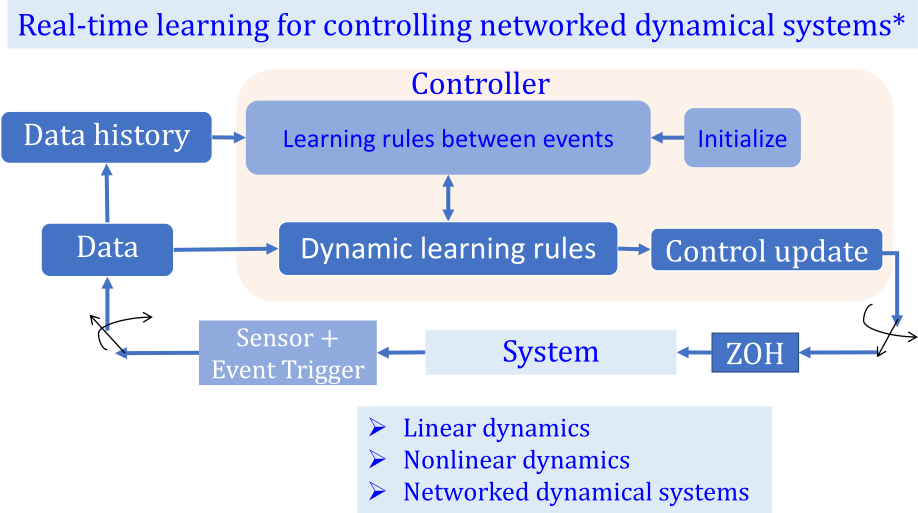
Data-driven ensemble control systems
Vignesh Narayanan
Assistant Professor
AI Institute
Computer Science and Engineering
Carolina Autism and Neurodevelopment Research Center
University of South Carolina
vignar@sc.edu
Curated learning materials, datasets, tools, and papers related to Dynamical Systems & AI.
Science and Technology Building
5th Floor
AI Institute, UofSC (AIISC)
1112 Greene St. Columbia, SC 29208